 KH
KH  FR
FR  AR
AR CN
CNInformation Minister: Ceasefire Means No Advance, No New Facts on the Ground, and No New Border Lines
AKP Phnom Penh, September 8, 2026 --
Cambodian Minister of Information H.E. Neth Pheaktra has stressed that a ceasefire means no advance, no creation of new facts on the ground and no establishment of new border lines amid the current Cambodia-Thailand border situation.
In a message posted on his social media account on Sept. 8, H.E. Neth Pheaktra raised the question of whether a ceasefire could transform territory allegedly occupied unlawfully through the use of force into the lawful territory of the occupying party.
“The answer is clear: it cannot,” he said.
The full message reads as follows:
“Ceasefire Means No Advance, No New Facts on the Ground, and No New Border Lines
A ceasefire means no advance, no creation of new facts on the ground, and no creation of new borders. There is a simple question that must be asked in relation to the current Cambodia–Thailand border situation: Can a ceasefire transform territory unlawfully occupied through the use of force into the lawful territory of the occupying party? The answer is clear: it cannot.
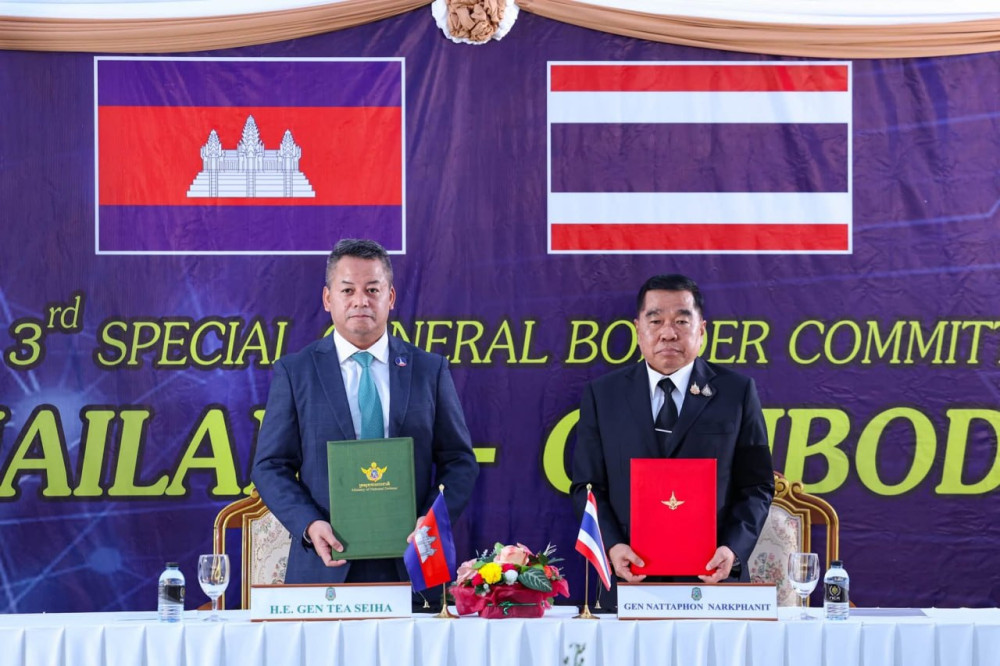
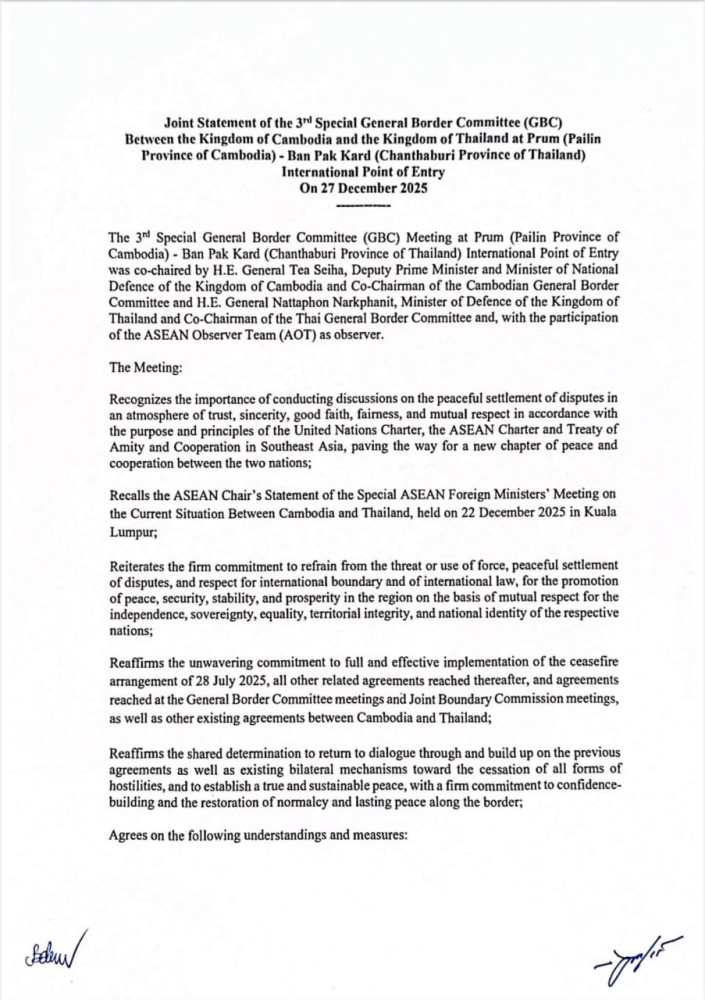
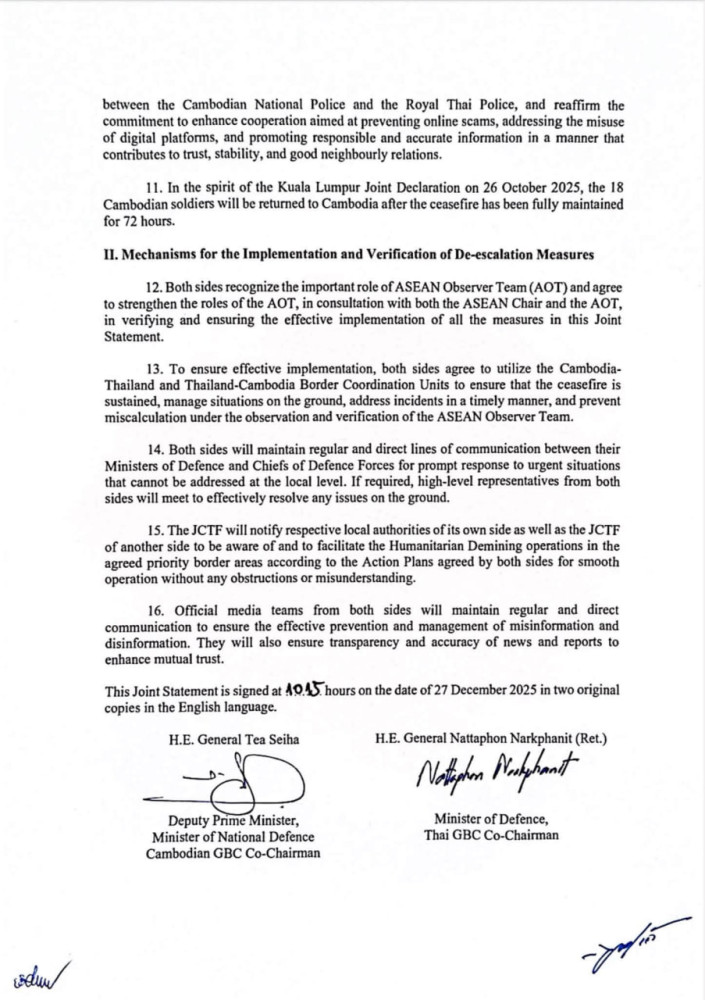
This is not merely Cambodia’s position in refusing to recognize border lines altered through the use of force. It is also consistent with fundamental principles of international law and, more importantly, with the substance of the Joint Statement of 27 December 2025, signed by Cambodia and Thailand.
At 12:00 noon on 27 December 2025, the ceasefire entered into force. From that moment onward, the governing principles should have been clear: no advance, no further troop movement, no reinforcement or expansion of control beyond one’s own side, no obstruction of civilians seeking to return home, and, above all, no creation of new borders. Yet the Thai military has not complied with all of these obligations under the Joint Statement.
1. Thailand cannot selectively invoke only the paragraphs that serve its interests
One of Thailand’s arguments is that the Joint Statement requires both sides to maintain their current troop positions without further movement. On that basis, Thailand claims that maintaining its troops in their existing positions constitutes implementation of the ceasefire rather than occupation of territory.
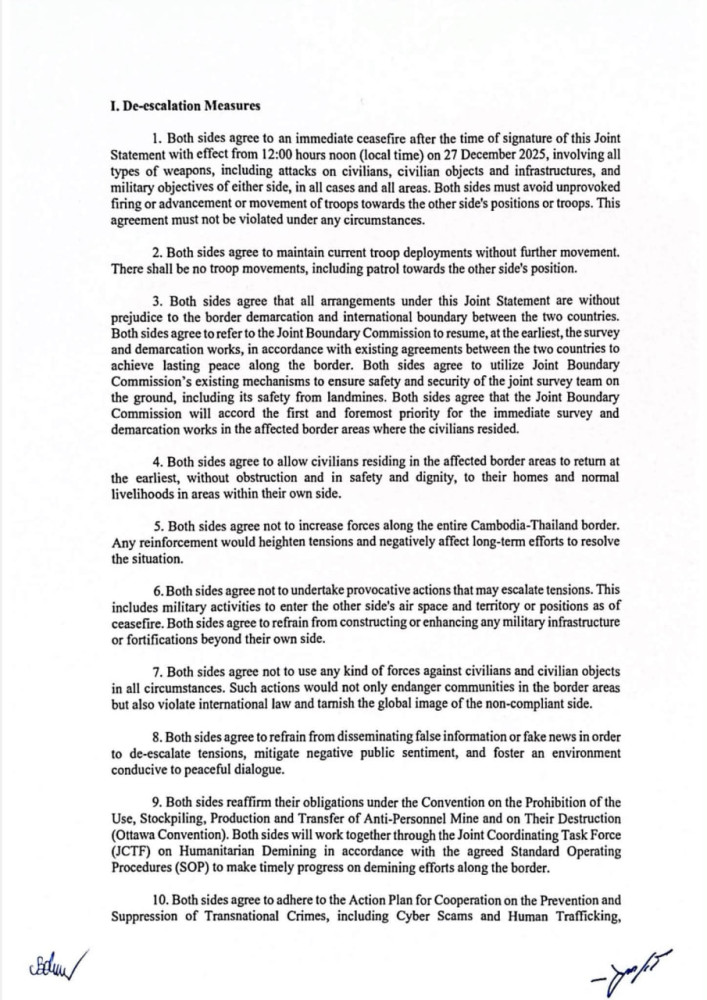
That interpretation is incorrect. Paragraph 2 cannot be read in isolation from paragraphs 3, 4 and 6.
Freezing troop positions is a temporary military measure intended to stop the fighting. It does not amount to recognition of sovereignty over the territory where troops happen to be stationed.
Yet after the ceasefire, Thai forces advanced deep into Cambodian territory and have continued to occupy and carry out unlawful construction activities on Cambodian soil, extending beyond the international boundary between the two countries and, in some areas, even well beyond the unilateral boundary line that Thailand itself has previously asserted as its own position.
The Joint Statement itself closes the door to the interpretation Thailand seeks to advance. Paragraph 3 clearly provides that all arrangements under the Joint Statement are without prejudice to border demarcation and the international boundary between the two countries.
The essential point is this:
Freezing troop positions is not the same as freezing sovereignty.
Troop positions are not international boundaries.
Factual control is not legal title.
A ceasefire preserves a temporary military situation in order to stop violence. It cannot become a mechanism for legalizing territorial control obtained through force.
The Joint Statement does not stop merely at prohibiting further troop advances. It also prohibits provocative actions and requires both sides to refrain from constructing or reinforcing military infrastructure and fortifications beyond their own side.
That language is highly significant.
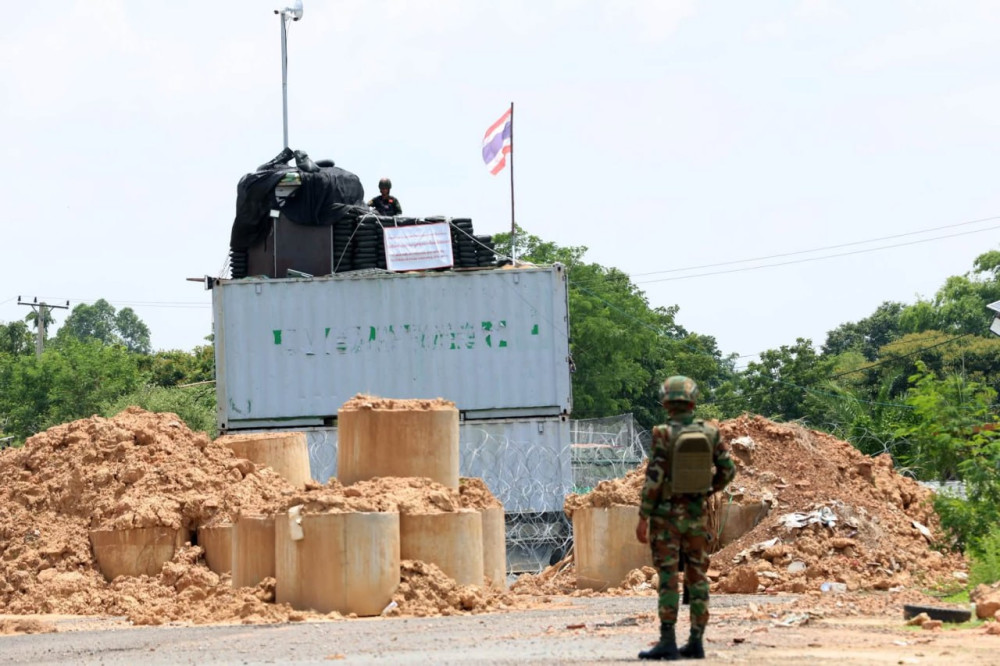
Accordingly, if Thai forces have installed barbed wire, containers, dug trenches, constructed fortifications, built roads or reinforced positions on territory that is legally Cambodian, such actions cannot be defended by saying: ‘We are merely maintaining our current troop positions.’
Construction and reinforcement of positions after the ceasefire demonstrate an effort to consolidate control and create new facts on the ground that may later be invoked for political or territorial purposes. Such conduct risks creating a fait accompli and, ultimately, moving toward the incorporation of Cambodian territory into Thailand through annexation. Any such action would be unlawful and would violate Cambodia’s sovereignty and territorial integrity.
2. The right of civilians to return is a practical test of Thailand’s argument
If Thailand maintains that there is no unlawful occupation, why are approximately 20,000 displaced Cambodian civilians still unable to return to their homes?
Paragraph 4 of the Joint Statement requires affected civilians to be able to return to their homes and resume their normal livelihoods without obstruction, in safety and dignity.
Therefore, if displaced Cambodian families cannot return to their homes, farmland or villages because of the presence of Thai forces, roadblocks, barbed wire or containers, this cannot be concealed behind the phrase ‘maintaining current troop positions.’
Such circumstances amount to an unlawful encroachment upon Cambodian territory and raise serious concerns under international law and human rights law.
Control exercised through force cannot extinguish the rights of civilians to their homes, land and communities.
3. Thailand cannot maintain two contradictory positions at the same time
This is the contradiction Thailand must answer clearly.
If Thailand claims that it fully respects the Joint Statement of 27 December 2025, while at the same time asserting that it may continue exercising control over territory that Cambodia claims, with a legal basis, as Cambodian territory by invoking the phrase ‘current troop positions,’ those two arguments cannot stand together.
Thailand itself signed the paragraph stating that the arrangements under the ceasefire are without prejudice to the international boundary.
Thailand therefore cannot use paragraph 2 to produce a legal or territorial effect that paragraph 3 expressly excludes.
It cannot say at the time of signing that ‘troop positions do not determine the boundary’ and then later use those same troop positions to create a territorial situation that it seeks to preserve.
Thailand cannot selectively invoke provisions that benefit it while disregarding the obligations attached to those same provisions.
The Joint Statement must be read and implemented as a whole. It cannot be treated as a menu from which one party selects one paragraph in order to negate another.
A ceasefire is not a title deed to territory.
Where troops happened to be standing at 12:00 noon on 27 December 2025 cannot determine where the international boundary lies.
Military positions are temporary facts on the ground; boundaries are matters of law.
Accordingly, every advance after the ceasefire, every installation of barbed wire or containers, every trench dug, every road or fortification constructed, and every other form of infrastructure established on Cambodian territory cannot create sovereign rights for Thailand.
Control by force does not create legal title, and a fait accompli cannot become an international boundary.
If Thailand claims that it respects the Joint Statement of 27 December, then that respect must have practical meaning: no further advance, no creation of new facts on the ground, no consolidation of control through force, no obstruction of Cambodian civilians returning to their homes, and no use of temporary military positions as a basis for territorial claims.
This is the core meaning of a ceasefire:
No advance.
No fait accompli.
No new border lines.”
AKP